
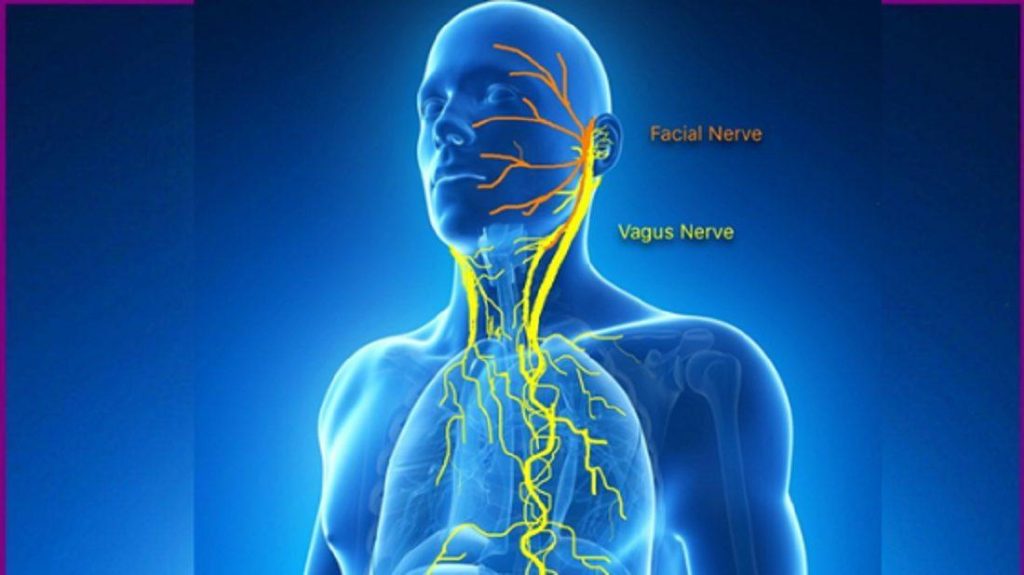
What if the key to resilience, calm, and well-being has been inside you all along?
Enter the vagus nerve, a powerful link between your brain, body, and emotions.
Understanding it can help you reconnect with your natural ability to regulate stress, heal, and restore balancr.
It’s an essential part of being already mindful.
What Is the Vagus Nerve?
The vagus nerve is the body’s main communicator between the brain and internal organs. It runs from the brainstem through the throat, heart, lungs, and gut, influencing everything from digestion and immunity to mood and heart rate. Its name comes from the Latin word vagus, meaning “wandering,” and that’s exactly what it does—carrying vital signals throughout the body.
Most importantly, the vagus nerve is the brake pedal for stress. It counterbalances the “fight or flight” response (sympathetic nervous system) with the “rest and digest” state (parasympathetic nervous system). When your vagal tone is strong, your body can recover quickly from stress, regulate emotions, and maintain physical health. When it’s weak, stress lingers, leading to anxiety, inflammation, and burnout.
Why This Matters for Resilience and Mindfulness
In modern life, our nervous systems are constantly bombarded with stress—social pressures, work demands, and digital overload. The vagus nerve is designed to bring us back to safety, but if we don’t intentionally engage it, we can get stuck in a chronic stress loop.
By strengthening your vagus nerve, you activate your natural resilience. You remember what your body already knows: how to shift from stress to ease, from anxiety to clarity, from survival to thriving. This is mindfulness in action—not just noticing thoughts, but tuning into the body’s built-in capacity for balance.
How to Support Your Vagus Nerve
The good news? You don’t need anything external to restore balance—you already have the tools within you. Simple, mindful practices can enhance vagal tone:
• Deep breathing (especially longer exhales)
• Humming or singing (activates vagus signals in the throat)
• Cold exposure (like splashing cold water on your face)
• Gentle movement (yoga, stretching, or walking in nature)
• Social connection (safe, co-regulating relationships strengthen vagal tone)
Each of these practices helps you shift out of chronic stress and back into a state of presence, ease, and resilience—your natural state.
Coming Home to Yourself
Understanding the vagus nerve isn’t just about science; it’s about reclaiming your well-being. You are already equipped with the ability to regulate stress, to heal, and to feel at ease in your own body. The more you nurture this awareness, the more you remember what it means to be already mindful.